

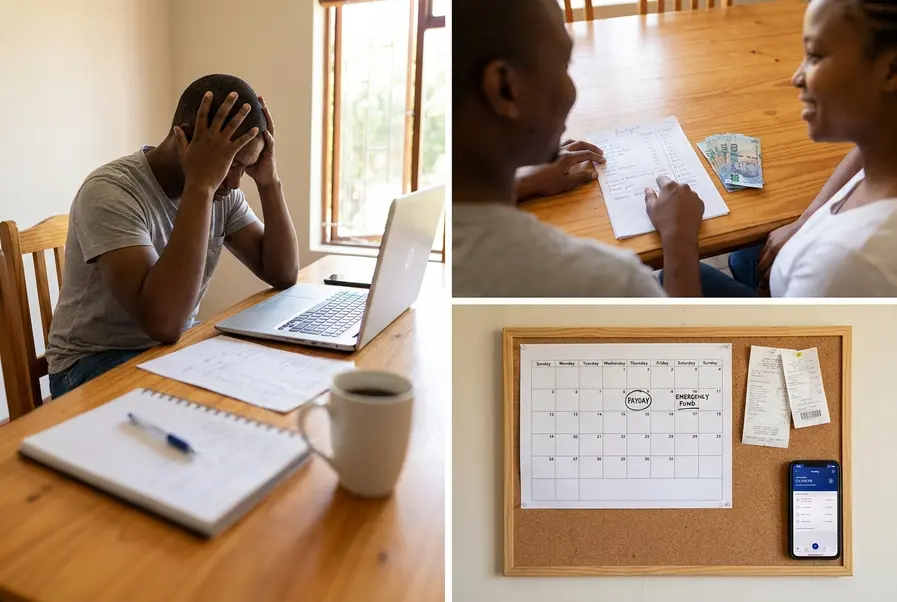
Financial stress can feel like a constant background noise: you wake up, check your balance, and suddenly your day already “starts loud.” The good news is that there are practical, realistic Ways to reduce financial anxiety that you can start using today, even if your budget is tight and your responsibilities are real. At Loan4Debt, we meet many South Africans who are juggling groceries, transport, school costs, and debt repayments, and the pattern is clear: when you have a plan, your mind calms down. This article gives you a plan you can actually follow, with a little humour along the way, because money is serious but you don’t have to suffer through the learning process.
You’re about to learn Ways to reduce financial anxiety that combine budgeting basics, debt strategies, and smart borrowing habits. None of this requires a finance degree. It does require honesty, consistency, and a willingness to stop letting “later” decide your future.
Why money stress feels so intense and why Ways to reduce financial anxiety work
Money anxiety is rarely just about numbers. It’s about uncertainty, responsibility, and the fear that one surprise expense can knock everything over. When income and expenses don’t line up, your brain stays on high alert because it’s trying to solve a problem that feels never ending.
Ways to reduce financial anxiety work because they bring clarity. Clarity turns vague fear into specific actions: how much you need, when you need it, what you can cut, what you can negotiate, and what you can repay. When you know the next step, your nervous system relaxes a bit. That’s not “woo woo.” That’s what happens when uncertainty decreases.
Ways to reduce financial anxiety by understanding your triggers
Before you change your budget, identify what triggers your stress. For some people it’s opening banking apps. For others it’s payday, because it feels like money arrives and disappears in the same breath. Your trigger might be debt calls, a family obligation, or recurring bills that you keep forgetting.
Write down your top three stress moments in a week. Then pair each moment with one action. For example, if your trigger is surprise debit orders, your action is to list all debit orders and move them to the same date. This simple pairing is one of the most effective Ways to reduce financial anxiety because it replaces panic with a predictable routine.
Ways to reduce financial anxiety with a budget that doesn’t make you miserable
If budgeting feels like punishment, you won’t stick to it. A good budget is not a cage. It’s a map that helps you keep the lights on and still enjoy your life. The aim is to know where your money is going before it goes.
Start with a “real life” baseline
Take your last one to three months of bank statements and group spending into categories: housing, transport, groceries, data and airtime, debt repayments, subscriptions, and “small stuff.” The small stuff is usually not small when you add it up. This baseline is the foundation for Ways to reduce financial anxiety because you can’t improve what you can’t see.
Once you have the baseline, pick two categories to adjust. Not ten. Two. Quick wins make you feel capable, and feeling capable is a big part of Ways to reduce financial anxiety.
Use a simple budgeting method you will actually follow
Try a practical split like needs, debt and goals, and lifestyle. You can tweak the percentages to fit your situation, but the concept stays the same: essentials first, progress second, fun third. When you allocate money on purpose, you reduce the “where did it go?” effect, which is one of the biggest drivers of financial worry.
-
Needs: rent, food, transport, insurance, electricity, school costs
-
Debt and goals: repayments, emergency fund, savings targets
-
Lifestyle: eating out, entertainment, shopping, extras
This is one of the most sustainable Ways to reduce financial anxiety because it gives you permission to spend within limits, instead of pretending you’ll never buy anything nice again.
Ways to reduce financial anxiety by building a mini emergency buffer
Unexpected expenses are not actually unexpected. They’re just irregular. A tyre will eventually need replacing. Someone will eventually get sick. Something will eventually break. The goal is to build a small emergency fund so surprises become inconvenient, not catastrophic.
How much should you save first?
Start with a “first safety layer” of R500 to R2,000, depending on your income and obligations. The point is not to become rich overnight. The point is to break the cycle where every surprise becomes new debt. This is one of the most important Ways to reduce financial anxiety because it reduces the fear of the next knock.
Set up an automatic transfer on payday, even if it’s small. Small and consistent beats big and occasional. If you can, keep it in a separate account so you’re not tempted to spend it.
Ways to reduce financial anxiety by getting a grip on debt
Debt isn’t automatically bad. But unmanaged debt is like trying to run with a backpack full of bricks. Your energy goes into keeping up instead of moving forward.
Choose a payoff strategy: snowball or avalanche
The snowball method focuses on paying the smallest balance first, which gives you quick wins and motivation. The avalanche method focuses on the highest interest rate first, which saves you more money over time. Both are valid Ways to reduce financial anxiety because they replace random payments with a clear plan.
Pick one method and stick to it for at least three months. Track progress weekly, not daily. Daily checking can increase anxiety, while weekly check ins support consistency.
Negotiate and restructure where possible
If you’re struggling, contact your creditors early. Many providers would rather adjust a payment plan than send your account into deeper trouble. Ask about reduced instalments, extended terms, or settlement options.
You can also educate yourself on basic budgeting and debt management concepts from established local finance publishers. A useful starting point is the budgeting and money content on Moneyweb’s budget section, which covers everyday South African money topics and helps you see you’re not alone in this.
Ways to reduce financial anxiety by cutting costs without feeling deprived
Cutting costs doesn’t mean cutting joy. It means cutting what you don’t value so you can afford what you do. This is a mindset shift that supports long term Ways to reduce financial anxiety.
Do a “subscriptions and sneaky spending” audit
Subscriptions are convenient, until you have five of them and only use two. Check streaming, apps, gym memberships, delivery memberships, and bank fees. Cancel what you don’t use. Then redirect that money to debt or your emergency buffer.
Next, review sneaky spending: daily snacks, frequent takeaways, impulse online buys. You don’t need to eliminate them. You need to decide a limit and plan it into your budget. Planned treats are part of Ways to reduce financial anxiety because they reduce guilt and binge spending.
Lower bills by asking better questions
Call your service providers and ask for cheaper packages. Compare data and airtime options. Shop around for insurance quotes when renewal comes up. Many people avoid these calls because they feel awkward, but “awkward” lasts five minutes and savings last months.
If you want a reputable local perspective on personal finance habits and smart planning, you can also browse Old Mutual’s financial education articles for practical guidance that fits real life.
Ways to reduce financial anxiety when you need cash fast: borrowing with a plan
Sometimes budgeting and cutting costs aren’t enough because life happens now, not next month. Maybe you have a medical expense, urgent transport repair, or a short term gap before payday. In those moments, borrowing can be a tool, but only if it’s done with clarity.
Use short term loans for short term problems
A short term loan should solve an immediate need and have a realistic repayment plan. If the repayment will squeeze your essentials, it can increase stress instead of reducing it. One of the most overlooked Ways to reduce financial anxiety is to decide your repayment plan before you apply, not after you receive the funds.
If you’re exploring quick options, you can learn more about our urgent cash loan solutions and how the application process works online. Read the terms carefully and borrow only what you truly need for the specific expense.
Match the loan amount to the actual expense
When you’re stressed, it’s tempting to borrow extra “just in case.” But extra borrowing often turns into extra spending and extra repayment pressure. A better approach is to list the expense items and total them. Then apply for the amount that matches reality.
This is one of the most practical Ways to reduce financial anxiety because it prevents the “loan spiral” feeling where next month’s money is already spoken for.
Ways to reduce financial anxiety with a weekly money routine
Routines reduce anxiety because they reduce uncertainty. A weekly money routine is a small habit that keeps your budget alive and prevents nasty surprises. You don’t need fancy spreadsheets. You need 20 minutes and a cup of tea.
Your 20 minute weekly check in
-
Check your balance and upcoming debit orders
-
Review your spending in the biggest two categories
-
Make one adjustment for the week ahead
-
Confirm your debt payments and due dates
-
Set aside a small amount for your emergency buffer if possible
These small steps are underrated Ways to reduce financial anxiety because they keep you in control. Control is calming. Even when the numbers are tight, knowing the truth is better than guessing.
Ways to reduce financial anxiety by protecting your income and planning ahead
When your income is irregular, money stress can feel unavoidable. But even then, planning can smooth out the bumps. The aim is to make your financial life more predictable, even if your paycheck isn’t.
Create a “minimum monthly cost” number
Calculate your minimum survival amount: rent, basic food, transport, essential debt, electricity, and critical dependants. This number becomes your baseline target. It’s one of the most powerful Ways to reduce financial anxiety because it tells you what must be covered first.
If your income varies, budget from the minimum upward. In better months, top up your buffer and pay extra toward debt. In tighter months, stick to the minimum plan.
Plan for known irregular expenses
List expenses that happen a few times a year: school uniforms, car services, festive season travel, annual insurance fees. Divide each by 12 and save that amount monthly. This is an easy technique, yet it’s one of the most effective Ways to reduce financial anxiety because it turns “surprises” into scheduled events.
FAQ: Ways to reduce financial anxiety in everyday South African life
1. What are the fastest Ways to reduce financial anxiety when you feel overwhelmed?
Start by writing down your next three bills and their due dates, then match them to the money you have or expect. This creates immediate clarity and stops your brain from spinning through a hundred “what if” scenarios. Next, choose one small action you can do today, like cancelling a subscription or calling a creditor, because quick wins are real Ways to reduce financial anxiety. Finally, avoid making big money decisions in a panic and give yourself 24 hours when possible.
2. How can you budget if your income changes every month?
Use a baseline approach: calculate your minimum monthly cost and treat it as your non negotiable budget. In months where you earn more, allocate the extra toward debt, a buffer, and planned irregular expenses. In months where you earn less, you fall back on the minimum plan and reduce discretionary spending. This flexibility is one of the most practical Ways to reduce financial anxiety for freelancers, commission earners, and gig workers.
3. Is it ever okay to use a payday loan as one of the Ways to reduce financial anxiety?
It can be okay if it’s used to solve a short term, urgent need and you have a clear repayment plan that doesn’t compromise essentials. The key is to borrow the smallest amount necessary and to understand the full cost of credit before you accept. Payday loans are not a long term solution for ongoing budget gaps. Responsible borrowing can be part of Ways to reduce financial anxiety, but only when it prevents bigger financial damage and you can repay on time.
4. What should you do if you keep missing debit orders and feeling stressed?
First, list every debit order, the amount, and the date it goes off. Then move as many as possible to the same week after payday, so your cash flow is easier to manage. You can also ask providers if they can change debit order dates, and many can. Creating one predictable “bills window” is one of the simplest Ways to reduce financial anxiety because it reduces random account surprises.
5. How do you stay motivated to pay off debt when it feels like it never ends?
Track progress visually, even if it’s just a note on your phone showing balances going down. Celebrate milestones that don’t cost money, like a home movie night or a braai with friends where everyone brings something. Also, choose a payoff method that suits your personality: snowball for motivation, avalanche for interest savings. Motivation is not constant, so routines and measurable progress are vital Ways to reduce financial anxiety.
6. How can you reduce anxiety if you’re supporting family and feel guilty saying no?
Set a fixed “support amount” in your budget that you can truly afford, and treat it like a bill that has limits. Communicate clearly and early, so it doesn’t become a last minute crisis conversation. If you can’t give money, consider offering non financial support like helping with job applications or budgeting. Boundaries are uncomfortable at first, but they’re meaningful Ways to reduce financial anxiety because they protect your stability.
Bring it all together: make Ways to reduce financial anxiety your normal
Financial calm isn’t about being perfect. It’s about being prepared and consistent, with smart systems that carry you when motivation is low. When you budget realistically, build a small buffer, manage debt intentionally, and borrow responsibly, you create momentum. And momentum is one of the best Ways to reduce financial anxiety, because it reminds you that your situation can change.
If you do need funds quickly for a genuine urgent expense, make sure you borrow with a clear plan and a repayment timeline. You can explore our urgent cash loan options and decide what fits your needs and budget. Are you interested in applying for a loan or do you simply have a question? We’re happy to help. Please feel free to get in touch with us at Loan4Debt.