

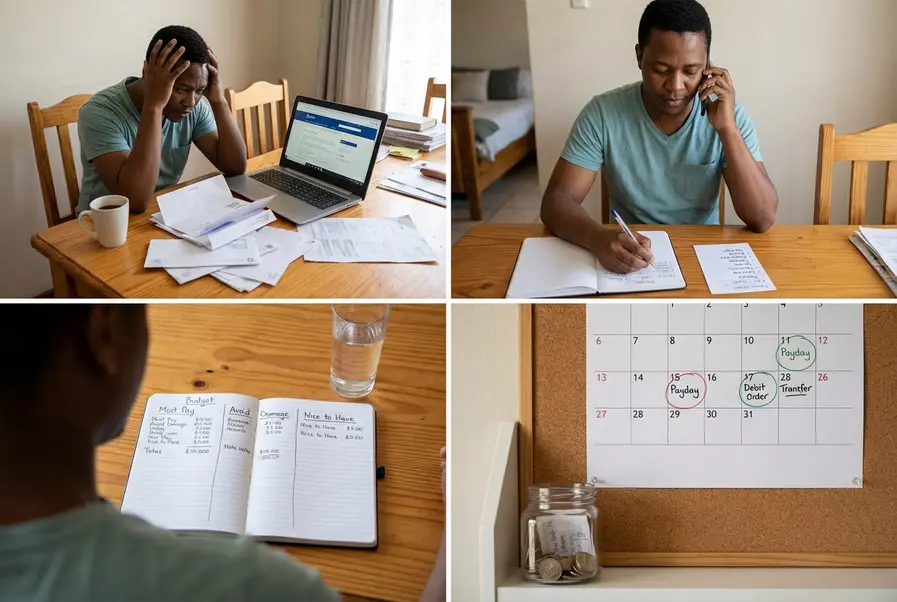
Missing a payment can feel like a financial “uh oh” moment, but it does not have to define your money story. How to Regain Control of Your Finances After Missing Payments starts with one simple idea: you are not broken, your budget is just under pressure. Whether it was a debit order that bounced, a credit account you could not cover, or a loan instalment you missed, you can get back on track with a calm plan, a bit of admin, and some smart choices that protect your cash flow. And yes, you can do it without living on instant noodles forever.
At Loan4Debt, we meet South Africans every day who need a fast reset after unexpected expenses, job disruptions, family emergencies, or just the domino effect of one missed payday. This guide is designed to help you regain financial control, reduce stress, rebuild good standing, and prevent the next missed payment.
How to Regain Control of Your Finances After Missing Payments: first do damage control
When you miss a payment, the biggest risk is not only the missed amount. It is the chain reaction that follows: penalty fees, higher interest, collection calls, and a credit profile that becomes harder to rebuild. The good news is that the first 48 hours after a missed payment are often the best time to act.
Step 1: confirm what you missed and what it triggered
Open your bank app and check the transaction history for the date the payment was meant to go off. Then review the lender or service provider statement to see whether there is a late fee, extra interest, or a failed debit order charge. If you have multiple missed payments, list them in order of urgency and impact.
Write down for each account: the minimum due, the date it was due, the new amount owed, and the next due date. This simple list becomes your recovery map and prevents you from guessing.
Step 2: contact the provider before they escalate
This is the part most people avoid, but it is also where you win back control. Call or email and explain that you missed a payment, confirm the current balance, and ask what options you have to catch up. Many providers can offer a payment arrangement, a revised debit order date, or a temporary plan if you act early.
Be direct, be polite, and ask them to confirm any agreement in writing. You are not asking for a favour, you are managing a solution.
Step 3: protect essential bills immediately
Prioritise what keeps your life functioning: rent, electricity, water, transport, and groceries. If you are choosing between paying a fee and keeping the lights on, keep the lights on, then negotiate the rest. The goal is to stabilise your household first so you can execute your plan.
Why missing payments happens and why it snowballs
Missing payments is usually not about being “bad with money”. It is often about timing, income volatility, and surprise expenses. One medical bill, one car repair, or one short pay cycle can cause a domino effect.
Debt products are structured around consistency. When consistency breaks, you can see extra charges or higher interest, which makes the next month harder. That is why How to Regain Control of Your Finances After Missing Payments focuses on both immediate fixes and long term habits.
-
Debit orders bounce when salary dates shift or cash is tight after month end expenses.
-
Multiple accounts due in the same week create a cash flow crunch, even if your overall income is enough.
-
High interest credit grows quickly, so a missed payment can raise the minimum due next cycle.
-
Stress leads to avoidance, and avoidance leads to more missed payments.
How to Regain Control of Your Finances After Missing Payments with a realistic budget reset
A budget reset is not a punishment. It is a rescue plan with numbers. Start with the next 30 days, not the next 12 months. Your mission is to create breathing room and prevent a second missed payment.
Build a “survival budget” for the next month
List your income that will actually land in your account, not what you hope will land. Then list essential expenses only. Essentials are housing, food, transport to earn income, basic utilities, and minimum debt payments needed to avoid escalation.
Pause or reduce non essentials for one month. Streaming, takeaways, clothing upgrades, and impulse spending can wait. You are not cancelling joy forever, you are buying yourself stability.
Use the 3 bucket method for clarity
-
Bucket 1: Must pay to live. Rent, food, transport, basic utilities.
-
Bucket 2: Must pay to avoid damage. Minimum debt payments, insurance, critical accounts.
-
Bucket 3: Nice to have. Everything else, even if it feels “small”.
This method helps you see where the money should go first, especially when you are recovering from missed payments.
Fix your payment dates to match your payday
Many missed payments are purely a timing problem. If your debit order runs on the 1st but you get paid on the 5th, you are set up to fail every month. Ask providers to move the debit order to a date that matches your income schedule.
If you have multiple debit orders, spread them across the month where possible. This reduces pressure and makes budgeting easier.
Prioritise debts strategically, not emotionally
When you feel behind, it is tempting to pay the smallest account first just to feel progress. That can work, but make sure you are not neglecting high cost debt or accounts that can trigger serious consequences.
Focus on the highest impact accounts first
In South Africa, missing certain payments can quickly lead to legal action or essential service disruption. Prioritise rent and municipal accounts, then secured debts tied to assets, then high interest credit.
When in doubt, ask each provider what happens if you pay late again and what fees apply. The “most expensive to ignore” should be high on your list.
Consider avalanche vs snowball, then choose what you will stick to
The avalanche method targets the highest interest rate first and can reduce total cost over time. The snowball method targets the smallest balance first and can build momentum. Choose the method you can actually maintain, because consistency beats the perfect plan that you quit after two weeks.
How to Regain Control of Your Finances After Missing Payments by negotiating like a pro
Negotiation is a normal part of financial life. You are allowed to ask for options and you are allowed to make a plan that fits your reality.
What to ask for when you call
-
Can you waive or reduce the late fee once off?
-
Can you move my payment date to align with my payday?
-
Can you confirm the total catch up amount and a schedule to settle it?
-
Can you freeze additional charges while I follow the plan?
Be honest about what you can pay and when. Overpromising leads to more missed payments, and then trust and options shrink.
Get everything in writing
If you agree on a new payment plan, ask for confirmation via email or SMS. Keep screenshots and reference numbers. This protects you if there is a misunderstanding later and helps you stay organised.
Short term cash flow tools: use carefully, use intentionally
Sometimes the problem is not that you cannot pay, it is that you cannot pay right now. In that case, bridging your cash flow responsibly can prevent further missed payments and the extra cost of penalties.
When a short term loan could help
A short term loan can be useful if you have a clear repayment plan and a stable incoming deposit, like a salary. The purpose should be specific: catching up one critical account, preventing a utility cut, or avoiding a cascade of late fees. It should not be used to fund lifestyle spending or to gamble on “next month will be better”.
If you are considering a fast option, you can review Loan4Debt’s instant cash loans with immediate payout to see how quick access to funds works and what to prepare before you apply.
Set guardrails before you borrow
Decide the maximum amount you need, not the maximum you might qualify for. Confirm the total repayment amount and when it will be deducted. Then adjust your survival budget so the repayment does not create another missed payment elsewhere.
Rebuild your credit health after missed payments
Regaining control is not only about paying back what you owe. It is also about restoring your financial reputation over time. Missed payments can affect your credit profile, but improvement is possible through consistent, on time behaviour.
Pay on time consistently for the next three months
Three months of consistent payments can make a meaningful difference to your financial confidence and your ability to plan. Use reminders, calendar alerts, and debit order date changes to support consistency. Even if you are paying smaller catch up amounts, on time is your new superpower.
Check your credit report and dispute errors
Sometimes missed payments are reported incorrectly or accounts show wrong statuses. It is worth checking and disputing mistakes with the bureau if you find them. For practical budgeting and personal finance insights in South Africa, you can also read guidance from reputable publishers like Moneyweb’s budget coverage.
Reduce utilisation on revolving credit
If you use a credit card or store account, try to keep the balance lower relative to the limit. High utilisation can signal stress and makes interest charges heavier. Paying down a portion and then keeping it stable helps your overall financial profile.
How to Regain Control of Your Finances After Missing Payments and stop it happening again
Once you have caught up, you want a system that makes missed payments less likely. Systems beat willpower, especially when life gets busy.
Create a mini emergency fund, even if it is small
An emergency fund is not a luxury, it is insurance against chaos. Start with a target of one small buffer amount, like a week of groceries or a basic transport fund. Automate a tiny transfer after payday so the fund grows without effort.
Use a “bill buffer” account if you can
If your bank setup allows it, separate your bill money from spending money. Deposit your monthly bill amount into that account right after payday. When debit orders run, you are protected from accidental overspending.
Plan for irregular expenses
School costs, car services, tyres, and annual fees are not surprises, they are just irregular. Divide them by 12 and save monthly. This turns big future hits into manageable monthly amounts.
Common mistakes people make after missed payments
Learning what not to do can be just as valuable as learning what to do. Here are the big ones that keep people stuck.
-
Ignoring calls and emails until the situation becomes legal or more expensive.
-
Taking on new debt without a clear repayment plan and updated budget.
-
Trying to “catch up” by skipping essentials like food or transport, which then affects income.
-
Paying random amounts across many accounts, rather than following a prioritised plan.
-
Not adjusting debit order dates to match actual payday timing.
FAQ: How to Regain Control of Your Finances After Missing Payments
1) What should you do first after you miss a payment?
Start by confirming exactly which payment was missed and what fees or interest were added. Then contact the provider quickly to ask for the updated amount due and whether you can arrange a catch up plan. Taking action early often reduces escalation and helps you feel in control again.
2) Can you negotiate late fees or a new payment date?
Yes, you can ask, and many providers are open to discussing options, especially if you communicate early. A once off fee waiver is not guaranteed, but it is a reasonable request if you have a good prior track record. Changing a debit order date to match your payday is often one of the simplest ways to prevent repeated missed payments.
3) How do you choose which debts to pay first when money is tight?
Prioritise essentials like housing and utilities, then focus on debts that carry high interest or serious consequences if unpaid. Make a list of minimum payments and due dates so you can see what is urgent and what can be negotiated. A structured plan prevents the common trap of paying a little bit everywhere and still falling behind.
4) Will missing payments ruin your credit forever?
No, but it can have a negative impact in the short term, depending on how late the payment is and how it is reported. The most powerful repair strategy is consistent on time payments going forward, because positive behaviour builds over time. If you believe something is reported incorrectly, check your report and dispute errors so you are not carrying mistakes you did not make.
5) When does it make sense to use a short term loan to catch up?
A short term loan can make sense when it prevents bigger costs, like multiple penalties, service interruptions, or a cycle of bounced debit orders. It should only be used if you have a clear repayment plan and you have adjusted your budget to handle the repayment without triggering another missed payment. For additional South African personal finance reading, you can explore articles from Old Mutual’s resource hub to strengthen your financial habits.
6) How can you prevent missed payments in the future?
Align payment dates with your payday, create reminders, and separate bill money from spending money where possible. Build a small emergency fund so a single unexpected expense does not wipe out your ability to pay essentials. Most importantly, review your budget monthly so it reflects real costs, not last year’s numbers.
Bring it all together: your simple recovery checklist
-
List missed payments, balances, fees, and next due dates.
-
Contact providers and request a realistic catch up plan in writing.
-
Build a 30 day survival budget and protect essentials first.
-
Adjust debit order dates to match payday and spread them out.
-
Consider short term support only with a clear repayment plan.
-
Stay consistent for three months and keep improving your system.
If you have read this far, you are already doing the most important thing: taking action instead of avoiding the problem. If you want to explore a fast way to stabilise your cash flow, take a look at our immediate payout loan options and decide whether it fits your plan. Are you interested in applying for a loan or do you simply have a question? We’re happy to help. Please feel free to get in touch with us at Loan4Debt.